Old houses, new stores: heritage brands online
A Kyoto tea merchant from 1717, a Brussels leather house from 1829 and a Porto soap maker from 1887. How some of the oldest businesses in the Showcase sell online without losing what made them.
By The Ecom Awards editors
Some of the stores in our Showcase belong to businesses that were trading long before the internet. A tea merchant in Kyoto has been selling tea since 1717. A leather house in Brussels dates from 1829.
Heritage brands have a particular problem online. They have a long story and a reputation for service, and a website can flatten both into a product grid. The stores below avoid that in different ways.
Explain the craft
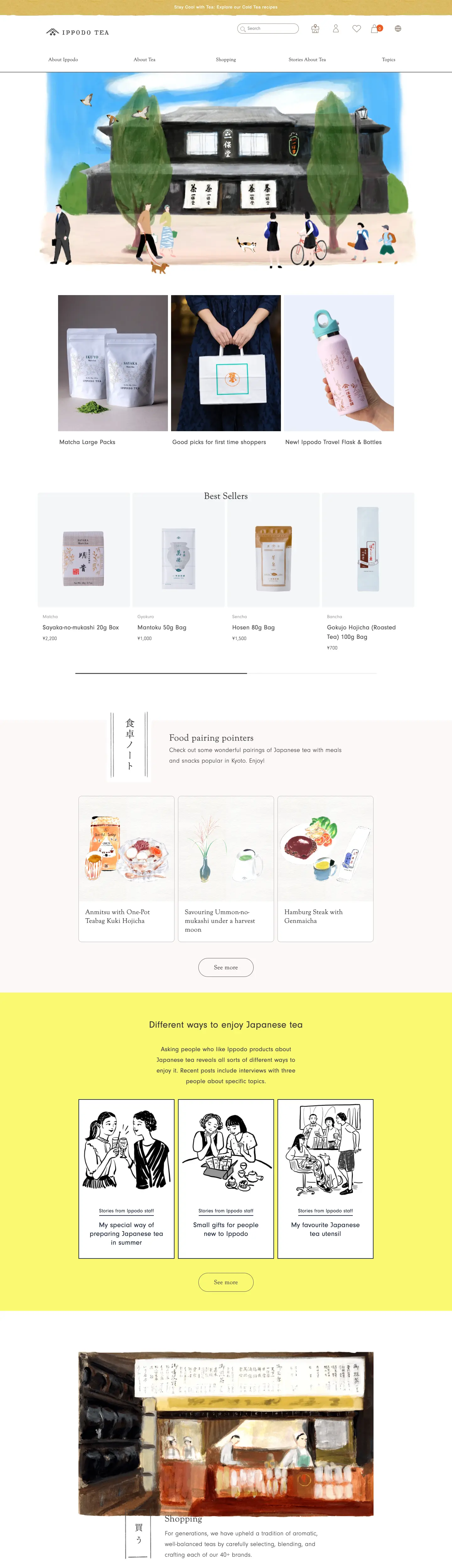
Ippodo Tea has sold Japanese tea in Kyoto since 1717. Its store is organised by tea type: matcha, gyokuro, sencha and more. Each type has a plain guide to what it is and how to brew it, and there’s a separate explainer on the types of tea.
That matters because Ippodo ships worldwide. Many overseas buyers won’t know the difference between gyokuro and sencha. The store teaches them without talking down to anyone, and the layout stays calm.
Mount Street Printers takes the same approach with printing. The London printer, founded in 1981, holds a Royal Warrant and makes die-stamped and foiled stationery. Its site walks through the printing processes and has a heritage timeline before it asks you to buy anything. When you do, you can choose engraving or die-stamping, or send a bespoke project enquiry. Built with WHP.
What to look at: if the craft is the reason for the price, show the craft.
Keep the boutique in the store
For luxury houses, the shop floor is part of the product. The better stores carry some of that service online.
Delvaux, founded in 1829, describes itself as the oldest fine leather goods house in the world. Its online flagship offers boutique appointment booking, a boutique finder and hot-stamping personalisation. You can share favourites by email, which helps when someone wants a second opinion. “Chronicles” tells the house’s story. Built with 51North.
Kusmi Tea dates its heritage to 1867 and now makes organic teas in Normandy. Its store has a boutique finder and a Kusmi Klub loyalty programme. Gift sets are split by price band, which makes gifting quick. Built with Axome.
Heritage online isn’t a timeline on the About page. It’s the service you’d expect in the shop, made to work on a screen.
Let the signature objects lead
Some houses are known for a few things. Their stores make those things easy to find.
Fornasetti, the Milan design house founded by the artist Piero Fornasetti, builds its navigation around its signature objects. The Tema e Variazioni plates have their own section. A black, white and gold palette lets the hand-decorated pieces carry the page. Bespoke, trade and vintage sit alongside the shop without cluttering it.
Claus Porto, from Porto and dating from 1887, is known for hand-wrapped soaps with patterned labels. The store gives that illustrated packaging room against a plain black and white layout. The menu is short and grouped by use, from soaps to grooming to home scent, including the Musgo Real range.
What to look at: when the product is the most recognisable thing about the brand, the layout should step back.
Old craft, new habits
Being old doesn’t mean standing still. Some of these stores add services that fit how people buy now.
Kalevala has made jewellery in Helsinki since 1937, in silver, gold and bronze. You can browse by type or by material, from bronze to diamond, which helps across a wide price range. A pre-loved section and a maintenance and repair service sit next to the new collections. The Kalevala Journal profiles the designers.
Bynd Artisan in Singapore grew out of a family bookbinding business that began in 1942. Its store puts free personalisation up front, sorts gifts by recipient and occasion, and runs workshops and corporate events.
What they have in common
Looking across these stores, a few things repeat.
- They explain what they make and how, in plain words.
- They keep a way to talk to a person, through appointments, boutiques or bespoke enquiries.
- They give their best-known products the clearest route in.
- They add modern services, such as pre-loved, repair and personalisation, without changing who they are.
None of them treats age as the selling point on its own. The history is there to explain why the product is worth having.
See the stores
Each store here has a Showcase page with a screenshot and the features our editors noticed. Browse the full Showcase or the collections for more.
Spotted something wrong, or know a store we should look at? Email hello@theecomawards.com.